
Literacy
Literacy at Sydenham Primary School
Reading, Writing, Speaking and Listening – Building Strong Communicators
At Sydenham Primary School we are committed to building confident, capable and articulate learners through high-quality instruction in Reading, Writing, Speaking and Listening, guided by the Victorian Curriculum 2.0 and informed by the latest research in the Science of Reading.
Our approach is systematic, explicit and inclusive, ensuring all students have the foundations they need to become successful lifelong readers, writers and communicators.
Our Evidence Based Approach
Our teaching is structured around the Big Six components of effective literacy instruction, based on international research and endorsed by the Science of Reading. These six essential areas form the basis of how children learn to read, write and communicate:
- Oral Language – Developing vocabulary, sentence structure, and the ability to listen and speak with clarity
- Phonological Awareness – Understanding the sound structure of language, including syllables, rhyme and phonemic awareness
- Phonics – Systematic teaching of the relationships between letters and sounds
- Fluency – Reading accurately, smoothly and with expression
- Vocabulary – Developing a wide and deep understanding of words and their meanings
- Comprehension – Constructing meaning from texts, understanding literal and inferred content
These components are explicitly taught, regularly practised, and continually assessed across all year levels to ensure each child progresses with confidence.
Reading
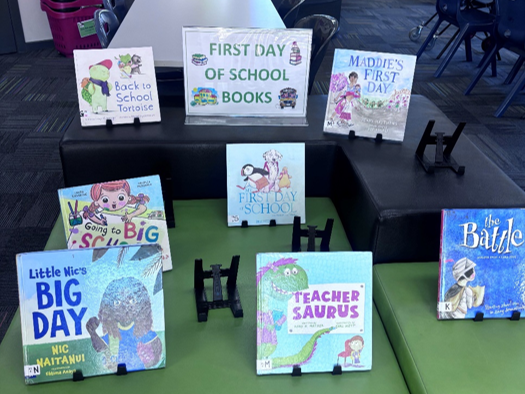
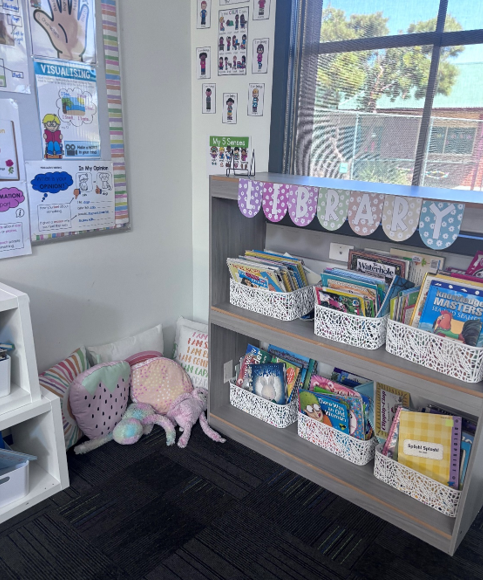
From Foundation to Year 6, reading instruction is delivered through a structured literacy approach. Early readers engage in daily phonics and phonemic awareness lessons, using decodable texts aligned to their skill level. As students progress, they move towards more complex texts and focus on fluency, vocabulary building, and deep comprehension. As student move into the Senior end the school the focus becomes less about learning to read and more about reading to learn. As readers, our students are also taught using complex texts. These texts are used to challenge our readers to identify meaning through text structure, figurative language inference and summary. Students will complete a range of novel studies over the year based on a range of genres.
We use high-quality resources, intervention where needed, and targeted small group instruction to ensure all learners make strong growth in reading.
Writing
Writing instruction at Sydenham Primary School is explicit, purposeful and scaffolded. Aligned with the Victorian Curriculum 2.0, students are taught to write in a variety of text types for different purposes and audiences. We focus on:
- The writing process (planning, drafting, revising, editing, publishing)
- Spelling and grammar instruction
- Sentence and paragraph structure
- Text cohesion and writer’s voice
Students learn to use mentor texts, build rich vocabulary, and revise with intent — developing strong written communication skills.
Handwriting:
Handwriting does matter and is closely related to academic achievement.
The physical act of handwriting benefits early literacy learners because the kinaesthetic action contributes to greater recognition and memorisation of letters.
Handwriting is the dominant recording skill used by students from Foundation to Year 2. Keyboarding skills are introduced in Year 3-6.
Handwriting skills are taught so that children become fluent writers to free up working memory. By children learning to form letters by hand this contributes to a stronger knowledge of words and assists with spelling. When words are written in a continuous flow rather than typed as separate letters, spelling memory is enhanced.
Speaking and Listening
We believe that oral language is the foundation of literacy. Our classrooms are rich in discussion, storytelling, presentation, and vocabulary-building experiences. Students are taught to:
- Listen actively and respond appropriately
- Use formal and informal language in context
- Share ideas clearly in group and individual settings
- Engage in structured discussions and oral presentations
Speaking and listening skills are embedded across all subject areas and support students’ social, emotional and academic development.
© Copyright Sydenham Primary School